Can the Shingles Vaccine Protect Your Heart? New Research Says It Might
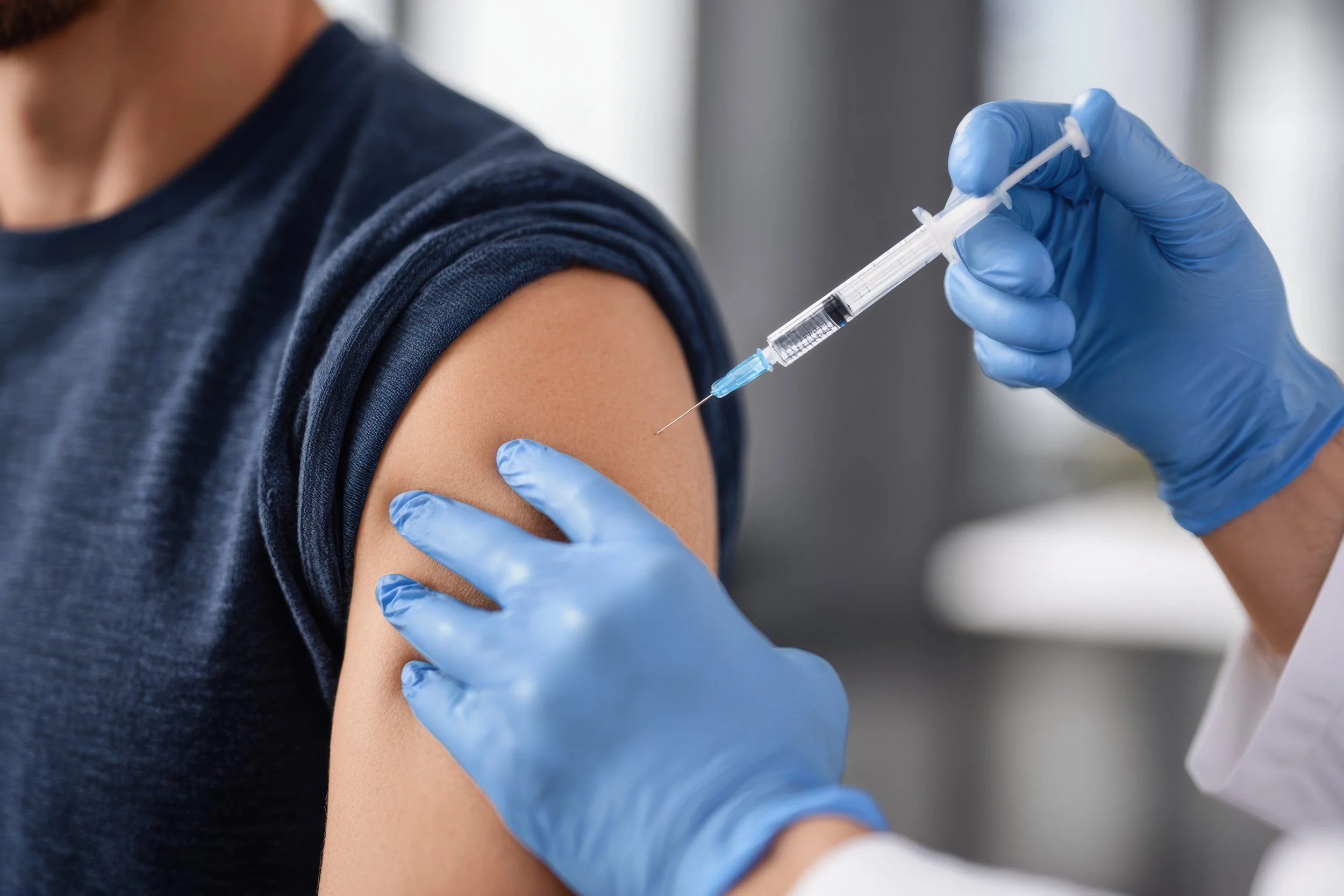
Adobe Stock License
When patients come to see me, they expect to talk about cholesterol, blood pressure, diet, and exercise. They do not expect me to ask whether they've had their shingles vaccine. But increasingly, that question is becoming part of the conversation, and a major new study presented in March 2026 at the American College of Cardiology's Annual Scientific Session helps explain why.
The study found that people with existing heart disease who received a shingles vaccine had nearly half the rate of serious cardiac events one year later compared with those who did not get vaccinated. For a vaccine most people associate purely with preventing a painful rash, that is a remarkable finding. And it adds to a steadily growing body of evidence that the shingles vaccine may be one of the more underappreciated tools we have for protecting the heart.
What Did the Study Find
Researchers led by Dr. Robert Nguyen at the University of California, Riverside, analyzed health records from a large national database covering more than 246,000 American adults aged 50 and older. Every person in the study had atherosclerotic cardiovascular disease, the condition caused by plaque buildup in the arteries that underlies most heart attacks and strokes.
The researchers compared people who had received at least one dose of a shingles vaccine, either Shingrix or the older Zostavax, with a matched group of people who had not been vaccinated. The two groups were carefully balanced so that they were similar in age, other health conditions, and socioeconomic factors. Then the team looked at what happened in the window between one month and one year after vaccination.
The results were striking. Compared with unvaccinated individuals, those who received a shingles vaccine were:
46 percent less likely to suffer any major adverse cardiac event
66 percent less likely to die from any cause
32 percent less likely to have a heart attack
25 percent less likely to have a stroke
25 percent less likely to develop heart failure
Dr. Nguyen described these levels of risk reduction as substantial, comparable to what we would expect from a patient quitting smoking. In cardiology, that is a powerful comparison. Quitting smoking is one of the single most beneficial things a person with heart disease can do. If a vaccine can deliver protection in that same range, it deserves serious attention.
Madison Avenue Concierge Medicine relies on a wide range of diagnostic technologies to assess cardiovascular health.
These tools allow Dr. Meyer to make accurate diagnoses and inform evidence-based treatment plans.
Why Would a Shingles Vaccine Help Your Heart?
This is the question I get as soon as I describe these findings to patients. It seems counterintuitive that a vaccine for a skin and nerve condition would have anything to do with the heart. But the biological explanation is actually quite logical once you understand what shingles does to the body.
Shingles, known medically as herpes zoster, is caused by the reactivation of the same virus that causes chickenpox. After you recover from chickenpox, usually in childhood, the virus does not leave your body. It lies dormant in your nerve tissue, sometimes for decades. As you age or if your immune system weakens, the virus can reactivate and cause shingles.
Here is the part that matters for your heart. A shingles infection is not just a localized rash. It triggers a significant inflammatory response throughout the body. Research has shown that an episode of shingles is associated with inflammation of the blood vessels, dysfunction of the delicate lining of the arteries, and a temporary increase in the blood's tendency to form clots. All three of these effects are dangerous for someone with cardiovascular disease.
Inflammation destabilizes the plaque deposits in arteries, making them more likely to rupture. A ruptured plaque is what triggers most heart attacks. The increased clotting tendency means that when a plaque does rupture, a dangerous clot is more likely to form. Studies have documented that in the weeks and months following a shingles episode, a person's risk of heart attack and stroke measurably rises.
The logic of the vaccine, then, is straightforward. By preventing the shingles infection in the first place, the vaccine prevents the inflammatory and clot-promoting cascade that the infection sets off. No infection means no inflammatory storm, and no inflammatory storm means less risk to the heart.
Is This an Isolated Finding Or Not?
One study, especially one presented at a conference before full peer-reviewed publication, should always be interpreted with some caution. But what makes this research compelling is that it is consistent with a wave of other evidence pointing in the same direction.
In 2025, researchers presented a systematic review and meta-analysis at the European Society of Cardiology Congress that pooled data from many studies and similarly found that shingles vaccination was associated with a lower risk of cardiovascular events like heart attacks and strokes. A separate large analysis found that the recombinant shingles vaccine was associated with meaningfully lower rates of hospitalization for both heart attack and stroke in adults over 50.
The evidence has become substantial enough that the European Society of Cardiology issued a clinical consensus statement in 2025 suggesting that vaccination should be considered a form of cardiovascular disease prevention, alongside the traditional pillars of blood pressure control, cholesterol-lowering therapy, and diabetes management. That is a significant shift in how the cardiology field thinks about vaccines.
At Madison Avenue Concierge Medicine, Dr. Meyer keeps himself and his patients on the cutting edge of every new medical development and study.
That’s the Madison Avenue Concierge Medicine advantage.
Be in the know regarding your health.
No excuses.
Join Madison Avenue Concierge Medicine
Are There Any Important Caveats to Keep in Mind?
I always want to be straightforward with my patients about the limitations of new research, and there are a few worth noting here.
This study was observational, which means it can demonstrate a strong association but cannot definitively prove that the vaccine directly caused the reduction in cardiac events. The researchers did careful statistical matching to make the vaccinated and unvaccinated groups as comparable as possible, but it remains possible that people who choose to get vaccinated differ in other ways. They may be more engaged with their health care, more likely to take their medications, or more likely to follow other healthy habits. The researchers acknowledged that some of the observed benefit could reflect these kinds of differences.
That said, the study's enormous size and rigorous statistical approach give the findings real weight, and the consistency with other research strengthens the case considerably. We may never have a giant randomized trial that assigns people to get a vaccine or not purely to measure heart outcomes, so well-conducted observational studies like this one are an important part of the picture.
What Does This Mean for You?
Here is my practical takeaway for patients, especially those over 50 and those who already have heart disease.
The Centers for Disease Control and Prevention already recommends the shingles vaccine for all adults aged 50 and older, and for younger adults with weakened immune systems. That recommendation exists independent of any heart benefit, simply because shingles itself is a painful and potentially serious condition that can lead to long-lasting nerve pain. The current vaccine, Shingrix, is given as two doses and is highly effective at preventing shingles.
What this new research adds is another compelling reason to follow through on that recommendation. If you have been putting off your shingles vaccine, or if you were not aware you were eligible, this is worth a conversation with your doctor. For my patients with established cardiovascular disease, I now view the shingles vaccine as a reasonable part of a comprehensive prevention strategy, not a separate issue that belongs only to their primary care doctor.
To be clear, the shingles vaccine is not a substitute for the cornerstones of heart health. It does not replace controlling your blood pressure, managing your cholesterol, eating well, staying physically active, and not smoking. Those remain the foundation of cardiovascular care. But the vaccine appears to be a low-risk, high-value addition to that foundation.
If you are over 50, talk to your doctor about whether you are up to date on your shingles vaccine. It is a simple step that protects you from a genuinely miserable illness, and it may also be quietly protecting your heart.
Our Concierge Medicine Services:
At Madison Avenue Concierge Medicine, Dr. Mark Meyer offers the most exclusive medical care through premier membership to our concierge medicine services, including:
Personal Doctor
Preferred Appointment Times
24/7 Urgent Care
Own Network of Renowned Specialists
VIP Experience
Executive Annual Physical
Full Body MRI Screening
Genetics Screening
The Meyer Nutrition Plan Included
Sources
American College of Cardiology. "Shingles Vaccine Drastically Cuts Risk of Serious Cardiac Events." Press Release. March 17, 2026. https://www.acc.org/About-ACC/Press-Releases/2026/03/16/19/33/Shingles-Vaccine-Drastically-Cuts-Risk-of-Serious-Cardiac-Events
Nguyen R, Desai A, et al. "Herpes Zoster Vaccination and Risk of Cardiovascular Events in Patients With Atherosclerotic Cardiovascular Disease." Poster presented at the American College of Cardiology Annual Scientific Session (ACC.26), New Orleans, March 30, 2026.
Medscape. "Shingles Vaccine Seen as Protective Against Serious Cardiac Events." April 7, 2026. https://www.medscape.com/viewarticle/shingles-vaccine-protective-against-serious-cardiac-events-2026a1000aif
European Society of Cardiology. "New Systematic Review and Meta-Analysis Shows an Association Between Shingles Vaccination and Lower Risk of Heart Attack and Stroke." August 30, 2025. https://www.escardio.org/news/press/press-releases/New-systematic-review-and-meta-analysis-shows-an-association-between-shingles-vaccination-and-lower-risk-of-heart-attack-and-stroke/
Yang Q, Chang A, Tong X, Merritt R. "Herpes Zoster and Subsequent Risk of Stroke and Heart Attack: A Systematic Review and Meta-Analysis." Journal of the American Heart Association. 2022;11(8):e024917. https://www.ahajournals.org/doi/10.1161/JAHA.121.024917
Pharmacy Times. "Shingles Vaccine Linked to Reduced Risks of Stroke, Myocardial Infarction, and Herpes Zoster Ophthalmicus." February 10, 2026. https://www.pharmacytimes.com/view/shingles-vaccine-linked-to-reduced-risks-of-stroke-myocardial-infarction-and-herpes-zoster-ophthalmicus
Centers for Disease Control and Prevention. "Shingles Vaccination." https://www.cdc.gov/shingles/vaccines/index.html
ScienceDaily. "This Common Vaccine Cuts Heart Risk Nearly in Half in New Study." March 20, 2026. https://www.sciencedaily.com/releases/2026/03/260319044659.htm