Beans, Lentils, and Tofu: The Quiet Blood Pressure Fighters in Your Pantry
Vannoni © 2026
High blood pressure is the single most common reason patients walk into my office. Roughly half of American adults have hypertension, and most of them are taking at least one medication for it. I prescribe those medications every day, and I am grateful we have them. But almost every patient I see asks the same follow-up question: is there something I can eat that would actually help?
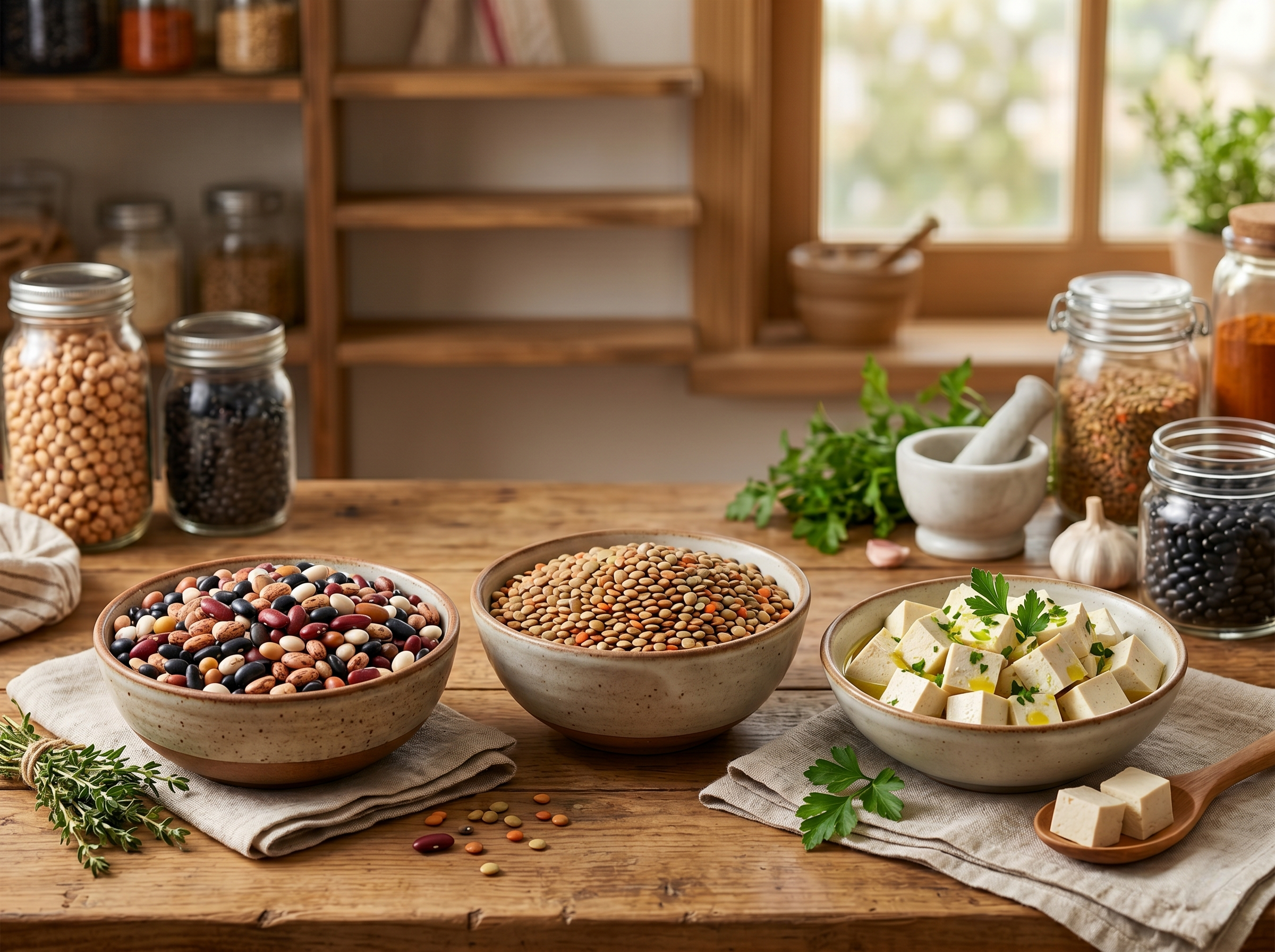
A new study published in BMJ Nutrition, Prevention and Health gives that question one of its clearest answers yet. The food on the list is not exotic. It is not expensive. You can buy it at any bodega, deli, or supermarket in the five boroughs. We are talking about beans, lentils, chickpeas, peas, tofu, edamame, and soy milk.
Join Our Concierge Membership Program
After the first meeting, you can apply to become a member in our premium concierge program and access our elite services, including our executive annual physical. The program consists in an annual membership fee giving access to our premium services.
BOOK AN APPOINTMENT
What Did the New Research Find?
Researchers pooled together 12 long-term observational studies from the United States, Europe, and Asia, covering more than 300,000 adults followed for up to 20 years. They tracked how much legumes and soy each person ate and watched who went on to develop high blood pressure over time.
The results are worth taking seriously. People with the highest legume intake were 16 percent less likely to develop hypertension compared with those eating the least. For soy foods, the risk reduction was 19 percent.
Even more useful than those headline numbers is what the researchers called the dose-response curve, which simply means how the benefit changes with how much you eat. The data showed that the protective effect kept growing as legume intake climbed, and the biggest payoff appeared at right around 170 grams a day. That is just under one cup of cooked beans, lentils, or chickpeas. At that level, the risk of developing high blood pressure dropped by close to 30 percent.
For soy foods, the sweet spot was 60 to 80 grams a day. That is about half a block of tofu, one cup of soy milk, or a generous handful of edamame. At that intake, the risk reduction reached around 28 to 29 percent. Eating more soy beyond that did not add additional benefit, which is a useful reminder that more is not always better.
A 30 percent reduction in the risk of developing high blood pressure is not a small effect. For comparison, that is in the same ballpark as some of the lifestyle interventions we already recommend, like cutting back on sodium or losing a modest amount of weight.
Why Do Beans and Soy Actually Work?
This is not magic, and it is not a fad. The biology behind these findings is reasonably well understood, and it involves several different pathways working together.
Legumes and soy are loaded with potassium, magnesium, and fiber. Potassium and magnesium help your kidneys handle sodium more efficiently and help your blood vessels relax. The fiber feeds the bacteria in your gut, which then produce compounds called short-chain fatty acids. These short-chain fatty acids appear to help blood vessels widen, which lowers the pressure pushing against your artery walls.
Soy in particular contains compounds called isoflavones, the best known of which are genistein and daidzein. Isoflavones boost the production of nitric oxide, a molecule your blood vessels make to keep themselves flexible and open. Earlier research presented at the American College of Cardiology found that daily soy intake could lower systolic blood pressure by several points on its own, with even stronger effects in some groups.
There is also what you are not eating when you are eating beans. If a serving of lentils takes the place of a serving of processed meat, salty deli food, or fast-food takeout, you are getting a double benefit: more of the good stuff and less of the things that drive blood pressure up.
The Meyer Nutrition Plan combines a fully holistic approach to weight loss and wellbeing with highly personalized elite, concierge care. Created by renowned New York cardiologist and internist Mark Meyer, MD, FACP, FACC, our nutrition includes the most comprehensive health screening and management in Manhattan.
Book Appointment
Are Most New Yorkers Getting Anywhere Close?
Here is what struck me most in the study. Average legume intake across Europe and the United Kingdom is only 8 to 15 grams a day. Most Americans are not doing much better. The intake associated with the biggest blood pressure benefit is more than ten times that amount.
In other words, this is not a story about people eating tons of beans and getting a small bump in benefit. It is a story about almost no one eating beans, and the people who actually do being meaningfully protected against one of the most common cardiovascular conditions in the world.
What Are Easy Ways to Get to a Cup of Legumes a Day?
You do not need to overhaul your diet or learn to cook to get there. New York is, fortunately, one of the easiest cities in the country to add legumes and soy. A few ideas I suggest to patients:
Order the rice and beans at the Cuban or Dominican place near your office. A standard side gets you most of the way to a daily serving.
Grab a falafel sandwich, a chickpea-based grain bowl, or a side of hummus with vegetables. Chickpeas count.
Pick up a can of black beans, kidney beans, or chickpeas. Rinse them to wash off some of the sodium and toss them into a salad, soup, pasta, or grain bowl. You do not need a recipe.
Try the tofu scramble at a brunch spot, or grab edamame as an appetizer next time you order Japanese. A serving of edamame at the start of a meal is one of the simplest ways to hit your daily target.
Swap your morning coffee splash of dairy milk for unsweetened soy milk. One cup gets you most of your soy serving in under a minute.
Cook a pot of lentil soup on a Sunday. Lentils do not need to soak, they cook in 20 to 25 minutes, and a single pot will get you through several lunches.
The point is consistency, not perfection. A cup of beans most days adds up to real cardiovascular protection over years.
Our Concierge Medicine Services
At Madison Avenue Cardiovascular & Concierge Medicine, Dr. Mark Meyer offers the most exclusive medical care through premier membership to our concierge medicine services.
What Are the Important Caveats?
A study like this shows association, not strict cause and effect. People who eat lots of legumes may also exercise more, smoke less, or eat fewer ultra-processed foods. Researchers do their best to adjust for those factors, and the size and quality of this analysis make the findings credible, but no single study should rewrite your entire diet.
If you already have high blood pressure, please do not stop your medications because you ate beans for lunch. Diet works alongside treatment, not instead of it. Some patients who improve their diet, exercise, sleep, and weight do end up needing less medication over time, but that is a conversation to have with your doctor based on your actual numbers.
If you take certain thyroid medications, large amounts of soy can interfere with absorption. Spacing your soy intake away from your morning thyroid pill is usually enough to manage this.
Among all the dietary advice patients hear, the case for legumes and soy is now genuinely strong. A cup of beans most days, plus a regular serving of tofu, soy milk, or edamame, looks like one of the most accessible, affordable, and well-supported food strategies for keeping blood pressure in a healthy range. Combine that with the rest of what we know about heart health (regular exercise, decent sleep, less salt and ultra-processed food, and treating risk factors when they appear), and you have a foundation that pays dividends for decades.
Get The Meyer Nutrition Plan
Sources
Plant-Based Foods May Help Lower Risk of High Blood Pressure (HealthDay)
Higher dietary soy and legume intake linked to lower high blood pressure risk (BMJ Group)
Compound in Soy Products May Help Lower Blood Pressure (American College of Cardiology)
American Heart Association: How Potassium Can Help Control High Blood Pressure