Ultra-Processed Foods and Cardiovascular Risk: What the New Evidence Tells Us
Vannoni © 2026
Walk down any supermarket aisle and you'll notice that most products aren't simple foods anymore, they're elaborate industrial formulations. These "ultra-processed foods" now dominate the American diet, making up nearly 60% of our daily calories. And according to mounting scientific evidence, this dietary shift may be quietly undermining our cardiovascular health in ways that go far beyond their high sugar and salt content.
What Are Ultra-Processed Foods?
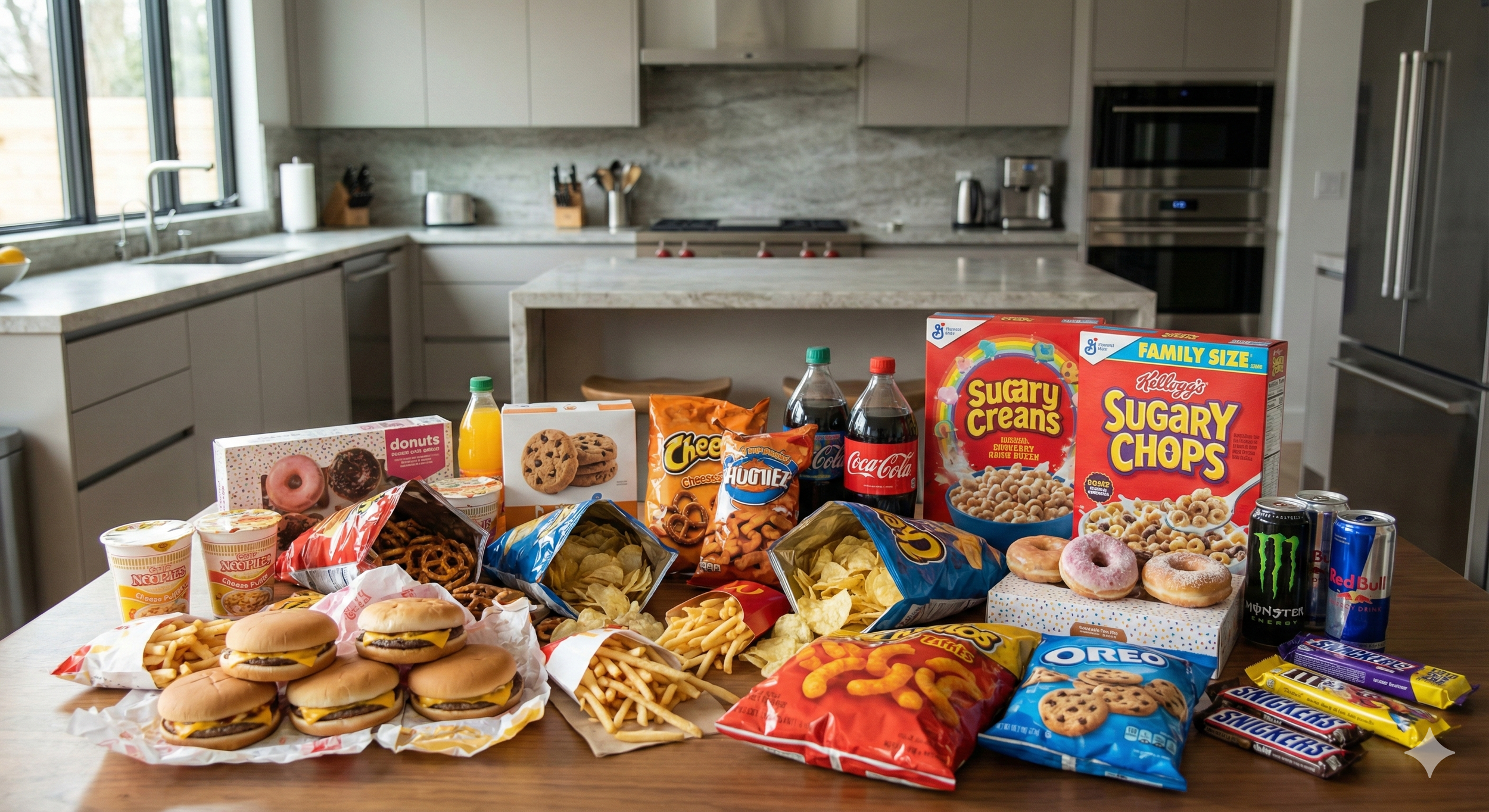
Ultra-processed foods (UPFs) are industrial products made with little to no whole foods. Think packaged snacks, sugary breakfast cereals, frozen dinners, sodas, instant soups, mass-produced breads, chicken nuggets, and energy bars. These aren't just "processed," they're created through industrial techniques with no equivalent in home cooking, often containing ingredients you'd never find in your kitchen: emulsifiers, artificial colors, flavor enhancers, sweeteners, and stabilizers.
The NOVA food classification system, widely used in nutrition research, categorizes UPFs as formulations of substances extracted from foods or synthesized in laboratories, assembled through industrial processes like extrusion, molding, and hydrogenation. If the ingredient list reads like a chemistry experiment, it's probably ultra-processed.
Book an appointment with Dr. Meyer to discuss how your diet is affecting your heart.
Why Is The Cardiovascular Evidence So Large and Alarming?
One of the most comprehensive studies to date, published in 2024 in The Lancet Regional Health – Americas, tracked over 206,000 health professionals in the United States for up to 32 years. The findings were striking: people who consumed the most ultra-processed foods had a 16% higher risk of cardiovascular disease and a 23% higher risk of coronary heart disease compared to those who ate the least.
A massive umbrella review analyzing data from over 8 million adults found similarly concerning patterns. Higher UPF consumption was associated with a 50% increased risk of cardiovascular death, alongside elevated risks for type 2 diabetes, obesity, and metabolic syndrome.
The numbers are more sobering when you look at dose-response relationships. A 2024 meta-analysis found that each additional 100 grams per day of ultra-processed food intake increased cardiovascular event risk by about 6%, hypertension risk by 14.5%, and all-cause mortality by 2.6%.
These aren't small studies with questionable methods, they're large, well-conducted investigations tracking hundreds of thousands of people over decades, accounting for other lifestyle factors and dietary patterns.
At Madison Avenue Cardiovascular & Concierge Medicine, Dr. Mark Meyer offers the most exclusive medical care
through premier membership to our concierge medicine services, including:
Personal Doctor
Preferred Appointment Times
24/7 Urgent Care
Own Network of Renowned Specialists
VIP Experience
Executive Annual Physical
Full Body MRI Screening
Genetics Screening
The Meyer Nutrition Plan Included
What Is The Hypertension Connection?
The link between ultra-processed foods and high blood pressure deserves special attention, as hypertension is one of the most important modifiable risk factors for heart disease and stroke.
In the ARIC (Atherosclerosis Risk in Communities) study, which followed middle-aged adults for nearly 30 years, those consuming the highest amounts of ultra-processed foods were significantly more likely to develop hypertension. The Brazilian ELSA-Brasil study found that participants with high UPF consumption had a 23% greater risk of developing hypertension over just four years of follow-up.
What's particularly concerning is that this association persists even after accounting for total calorie intake, body weight, and overall diet quality, suggesting that ultra-processed foods damage cardiovascular health through mechanisms beyond simply making us gain weight.
~ Don’t Have To wait To Hear About The Newest Study - Be At The Center of State-of-the-Art Healthcare ~
Join Madison Avenue Concierge Medicine, Book a Consultation with Dr. Meyer
How Do Ultra-Processed Foods Harm Your Heart’s Mechanisms?
Researchers have identified multiple pathways through which ultra-processed foods may damage cardiovascular health:
1. Chronic Inflammation
Ultra-processed foods promote systemic inflammation, a key driver of atherosclerosis and hypertension. Studies show that people consuming more UPFs have higher levels of inflammatory markers like C-reactive protein and interleukin-6. The refined sugars, unhealthy fats, and chemical additives in these foods can trigger inflammatory processes that damage blood vessel walls and make plaques more likely to rupture.
2. Gut Microbiome Disruption
Your gut contains trillions of bacteria that play crucial roles in metabolism, immune function, and cardiovascular health. Ultra-processed foods, with their emulsifiers, artificial sweeteners, and preservatives, fundamentally alter this bacterial ecosystem. Research shows UPF consumption reduces beneficial bacteria like Lachnospira and Roseburia while increasing harmful species like Shigella. This imbalance impairs gut barrier function, increases inflammation, and affects how your body processes nutrients.
3. Metabolic Dysfunction
The high levels of added sugars and refined carbohydrates in ultra-processed foods cause rapid spikes in blood glucose and insulin. Over time, this promotes insulin resistance, type 2 diabetes, and metabolic syndrome, all major cardiovascular risk factors. The excessive sodium in UPFs (they account for nearly 90% of added sodium in the American diet) directly raises blood pressure through multiple mechanisms affecting the kidneys, blood vessels, and hormonal systems.
4. Altered Food Matrix Effects
The physical structure of food matters. Industrial processing breaks down the natural food matrix, affecting how quickly nutrients are absorbed. Ultra-processed foods are engineered to be "hyperpalatable," triggering reward centers in your brain and promoting overconsumption. Their soft, pre-digested texture means they're absorbed rapidly, causing greater glycemic and metabolic responses than whole foods with similar nutritional profiles.
5. Food Additives and Contaminants
Processing creates potentially harmful compounds: trans fats from partial hydrogenation, advanced glycation end products from high-heat processing, acrylamide, and heterocyclic amines. Food packaging can leach endocrine-disrupting chemicals like bisphenols (BPA) into foods, which have been linked to insulin resistance, obesity, and hypertension.
Are All Ultra-Processed Foods Equal?
One important nuance emerging from recent research: not all ultra-processed foods carry the same risk. The 2024 U.S. cohort analysis found that while sugar-sweetened beverages and processed meats were strongly associated with increased cardiovascular risk, some categories showed neutral or even inverse associations.
Surprisingly, ultra-processed breads, cold cereals, yogurt, and dairy desserts showed either no association or slightly reduced risks in some analyses. This doesn't mean these foods are health foods, but it suggests the category is heterogeneous, some ultra-processed items may be less harmful than others.
The worst offenders appear to be:
Sugar-sweetened and artificially-sweetened beverages
Processed meats (hot dogs, deli meats, bacon)
Packaged sweet and savory snacks
Instant noodles and soups
Frozen meals and pizza
Join Our Concierge Membership Program
What Does This Mean for Your Heart Health?
The evidence is clear enough that major health organizations are taking notice. The American Heart Association now explicitly recommends limiting ultra-processed foods as part of heart-healthy eating patterns.
Here's what you can do:
Read labels carefully. Long ingredient lists with unfamiliar chemical names are red flags. If you can't pronounce ingredients or wouldn't use them in home cooking, the product is likely ultra-processed.
Prioritize whole and minimally processed foods. Build meals around vegetables, fruits, whole grains, legumes, nuts, fish, and minimally processed proteins. The Mediterranean and DASH diets, both proven to reduce cardiovascular risk, naturally emphasize these foods.
Cook at home more often. Even simple home cooking virtually eliminates ultra-processed foods from your diet. Batch cooking on weekends can make weeknight meals easier.
Make gradual swaps. Replace sugary drinks with water or unsweetened beverages. Choose steel-cut oats over sugary cereals. Pick whole grain bread with short ingredient lists over ultra-processed varieties.
Don't aim for perfection. Complete elimination of ultra-processed foods isn't realistic for most people. The research suggests a dose-response relationship—meaning even reducing UPF intake can provide cardiovascular benefits.
Get The Meyer Nutrition Plan
What Is The Bottom Line?
Ultra-processed foods represent a fundamental departure from how humans have eaten throughout history. While convenient and inexpensive, they appear to promote cardiovascular disease through multiple biological mechanisms: inflammation, metabolic dysfunction, gut microbiome disruption, and exposure to potentially harmful additives and contaminants.
The evidence linking ultra-processed foods to hypertension, coronary disease, and metabolic dysfunction is now substantial, consistent across populations, and biologically plausible. These foods don't just contribute empty calories, they actively harm cardiovascular health in ways that persist even when total calories and weight are accounted for.
The good news is that dietary changes are powerful and within your control. By gradually shifting toward less processed, more whole-food-based eating patterns, you can meaningfully reduce your cardiovascular risk. Your heart, and the rest of your body, will thank you.
Sources
Mendoza K, Smith-Warner SA, Rossato SL, et al. Ultra-processed foods and cardiovascular disease: analysis of three large US prospective cohorts and a systematic review and meta-analysis of prospective cohort studies. The Lancet Regional Health – Americas. 2024;37:100859. https://www.thelancet.com/journals/lanam/article/PIIS2667-193X(24)00186-8/fulltext
Lane MM, Gamage E, Du S, et al. Ultra-processed food exposure and adverse health outcomes: umbrella review of epidemiological meta-analyses. BMJ. 2024;384:e077310. https://pubmed.ncbi.nlm.nih.gov/38418082/
Qu Y, Hu W, Huang J, et al. Ultra-processed food consumption and risk of cardiovascular events: a systematic review and dose-response meta-analysis. eClinicalMedicine. 2024;69:102484. https://www.thelancet.com/journals/eclinm/article/PIIS2589-5370(24)00063-4/fulltext
Wang X, Sun Q. Ultra-Processed Foods and the Impact on Cardiometabolic Health: The Role of Diet Quality. Diabetes & Metabolism Journal. 2024;48(6):1047-1055. https://www.e-dmj.org/journal/view.php?doi=10.4093/dmj.2024.0659
Zhang Z, Jackson SL, Martinez E, et al. Ultra-Processed Food Consumption and Risk of Incident Hypertension in US Middle-Aged Adults. Journal of the American Heart Association. 2024;13(21):e035189. https://www.ahajournals.org/doi/10.1161/JAHA.124.035189
Steele EM, Juul F, Neri D, et al. Dietary share of ultra-processed foods and metabolic syndrome in the US adult population. Preventive Medicine. 2019;125:40-48.
Srour B, Kordahi MC, Bonazzi E, et al. Ultra-Processed Foods and Cardiovascular Diseases: Potential Mechanisms of Action. Advances in Nutrition. 2022;13(3):634-648. https://pmc.ncbi.nlm.nih.gov/articles/PMC8483964/
Zhong VW, Van Horn L, Cornelis MC, et al. Ultra-Processed Foods and Incident Cardiovascular Disease in the Framingham Offspring Study. Journal of the American College of Cardiology. 2021;77(12):1520-1531. https://www.jacc.org/doi/10.1016/j.jacc.2021.01.047
National Heart, Lung, and Blood Institute. Spotlight on UPFs: NIH explores link between ultra-processed foods and heart disease. March 2025. https://www.nhlbi.nih.gov/news/2025/spotlight-upfs-nih-explores-link-between-ultra-processed-foods-and-heart-disease
Lopes AE, Araújo LF, Levy RB, et al. Ultra-processed foods, changes in blood pressure and incidence of hypertension: the Brazilian Longitudinal Study of Adult Health (ELSA-Brasil). Public Health Nutrition. 2023;26(5):973-983. https://pmc.ncbi.nlm.nih.gov/articles/PMC10195295/