That Sugar Substitute in Your Gum May Not Be So Heart-Friendly
Vannoni © 2026
Walk down almost any aisle of a Whole Foods, Duane Reade, or your neighborhood bodega and you will find shelf after shelf of foods marketed as sugar-free, keto-friendly, low-carb, or diabetic-safe. Read the ingredient labels and you will keep running into the same words: xylitol, erythritol, sorbitol. These are sugar alcohols, and they have quietly become some of the most consumed food additives in the American diet, particularly among the very people trying to protect their metabolic and cardiovascular health.
A new study presented at the European Society of Cardiology Congress in Munich in August 2026, combined with earlier work from the Cleveland Clinic, is now raising a serious question about one of the most popular of these sweeteners. If you regularly reach for sugar-free gum, keto ice cream, protein bars, or diet baked goods, this is a story worth knowing about.
At Madison Avenue Concierge Medicine, Dr. Meyer keeps himself and his patients on the cutting edge of every new medical development and study.
That’s the Madison Avenue Concierge Medicine advantage.
Be in the know regarding your health.
No excuses.
Join Madison Avenue Concierge Medicine
What Actually Is Xylitol?
Xylitol is a sugar alcohol, a class of compounds that occurs naturally in very small amounts in some fruits and vegetables and also inside your own body. What you buy in a store, however, is almost always manufactured on an industrial scale. It looks and tastes remarkably similar to table sugar, has about 40 percent fewer calories, and does not raise blood glucose the way regular sugar does. Those properties made it a darling of the diabetes and low-carb communities, and industry has responded accordingly.
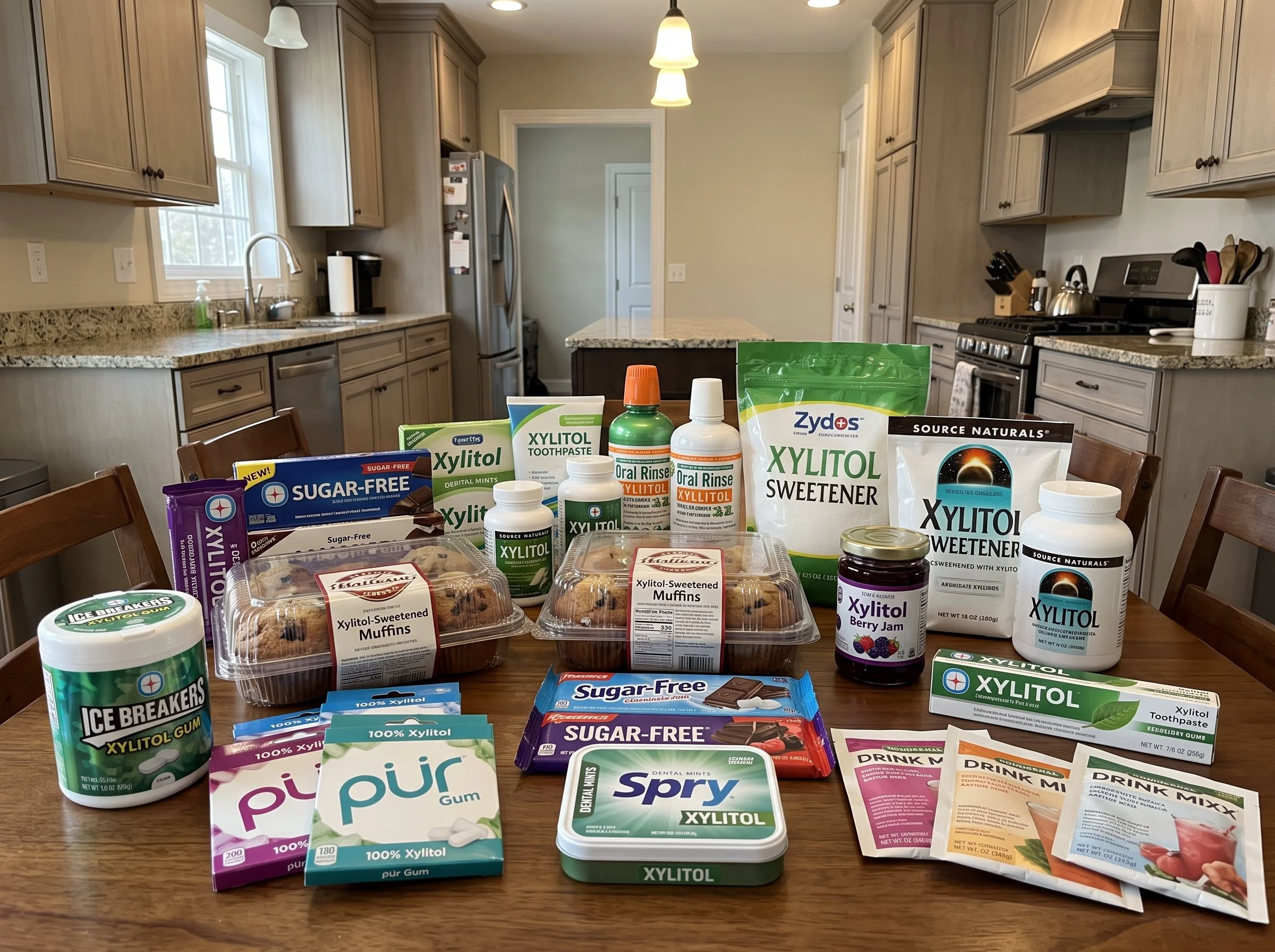
Today you will find xylitol added, often in substantial amounts, to sugar-free chewing gum, mints, keto and low-carb ice cream, protein bars, sugar-free baked goods, diabetic candies, and many toothpastes and mouthwashes.
What Was The New Study Presented in Munich?
Researchers presented findings at the ESC Congress 2026 from an analysis of two large long-term studies: the Canadian Longitudinal Study on Aging and the European Prospective Investigation into Cancer Norfolk cohort. Together, the analysis included more than 17,000 adults, followed for years and in some cases decades.
The results were sobering. In the Canadian cohort, adults with the highest blood levels of xylitol had a 57 percent higher risk of a major adverse cardiovascular event, meaning heart attack, stroke, or death, over six years of follow-up compared with those who had the lowest levels. In the EPIC-Norfolk cohort, the association was smaller but still meaningful, with an 18 percent higher risk over long-term follow-up. Importantly, the relationship was dose-dependent, meaning that as blood xylitol levels rose, so did the risk of cardiovascular events.
These findings held up after researchers adjusted for the usual suspects: body mass index, diabetes, high blood pressure, and other artificial sweetener use. In other words, the elevated risk was not simply because heavier or sicker people were consuming more xylitol.
Join Our Concierge Membership Program
After the first meeting, you can apply to become a member in our premium concierge program and access our elite services, including our executive annual physical. The program consists in an annual membership fee giving access to our premium services.
BOOK AN APPOINTMENT
Why Does This Fit With What We Already Knew?
The ESC study did not come out of nowhere. In 2024, a team led by Dr. Stanley Hazen at the Cleveland Clinic published a landmark paper in the European Heart Journal that essentially laid the biological groundwork.
The Cleveland team ran three separate lines of investigation. First, they analyzed data on more than 3,000 patients from the United States and Europe and found that people with the highest circulating xylitol levels had a significantly higher three-year risk of heart attack, stroke, or death. Second, they ran laboratory experiments showing that xylitol makes blood platelets more likely to clump together and form clots, exactly the process that triggers most heart attacks and strokes. Third, and perhaps most striking, they gave 10 healthy volunteers a drink sweetened with 30 grams of xylitol, which is roughly the amount in a single scoop of keto-friendly ice cream. Within 30 minutes, plasma xylitol levels shot up a thousand-fold, and every measure of platelet activity increased sharply in every single participant.
That last finding is important because it is not just epidemiology. It is direct human evidence that consuming a realistic serving of a xylitol-sweetened product acutely changes how your blood clots.
Who Should Actually Be Concerned?
This is where the story turns particularly cardiology-relevant. The very people most heavily marketed to for sugar alcohol products are, by and large, the same people at highest baseline risk of blood clot related events. Patients with type 2 diabetes. Patients with metabolic syndrome. Patients on the ketogenic diet who are trying to manage weight or insulin resistance. Patients with a history of heart attack or stroke.
If you are in one of those groups and you have been swapping regular sugar for xylitol-sweetened products all day, believing you were doing your cardiovascular system a favor, the current evidence suggests you may not be.
To be clear about what the evidence does not yet show. These are observational studies, which means they establish a strong association but cannot definitively prove that xylitol consumption directly causes heart attacks and strokes. The human intervention data on platelet activity is more directly causal but is short-term. A randomized clinical trial testing long-term cardiovascular outcomes has not yet been done, and probably will not be for years.
Even without that final piece, though, the accumulating pattern is enough for me to bring xylitol up with patients who have known cardiovascular risk factors.
Our Concierge Medicine Services
At Madison Avenue Cardiovascular & Concierge Medicine, Dr. Mark Meyer offers the most exclusive medical care through premier membership to our concierge medicine services.
What Is Some Practical Guidance?
You do not need to panic, and you certainly do not need to throw out your toothpaste. The amount of xylitol you swallow from brushing is minuscule and almost certainly not the issue. What matters is what you are eating and drinking.
Read labels on anything marketed as sugar-free, keto, low-carb, or diabetic-friendly. Sugar alcohols are usually listed near the top of the ingredients if they are present in meaningful amounts.
Pay particular attention to keto ice creams, protein bars, sugar-free baked goods, and sugar-free candies, which tend to contain the largest per-serving doses.
Sugar-free gum in small amounts is unlikely to be the problem. Consuming multiple servings a day of xylitol-sweetened treats is a different story.
If you use these products because you are managing diabetes or metabolic disease, please do not simply swap back to regular sugar. That is not the answer either. The better options are naturally low-sugar foods, stevia or monk fruit in modest amounts, and simply retraining your palate over time to want less sweetness across the board. These are conversations worth having at your next visit.
Xylitol is not the only sugar alcohol under scrutiny. The same Cleveland Clinic research group has published similar findings on erythritol, another widely used sweetener. The emerging pattern suggests that we may have accepted these compounds as safe based on relatively short-term studies and their favorable metabolic profile, without adequately investigating their long-term cardiovascular effects.
That is a humbling reminder for anyone who thinks of "natural" or "sugar-free" as automatic synonyms for "heart-healthy." The label matters. The evidence matters. And when the evidence shifts, so should our recommendations.
If you have cardiovascular risk factors and want to review what you are actually putting in your body, please come in and talk with us. That is exactly the kind of proactive, prevention-focused conversation a concierge cardiology relationship is built for.