The Best Time to Get Your Flu Shot This Year Is Later Than You Think
© 2026 Vannoni
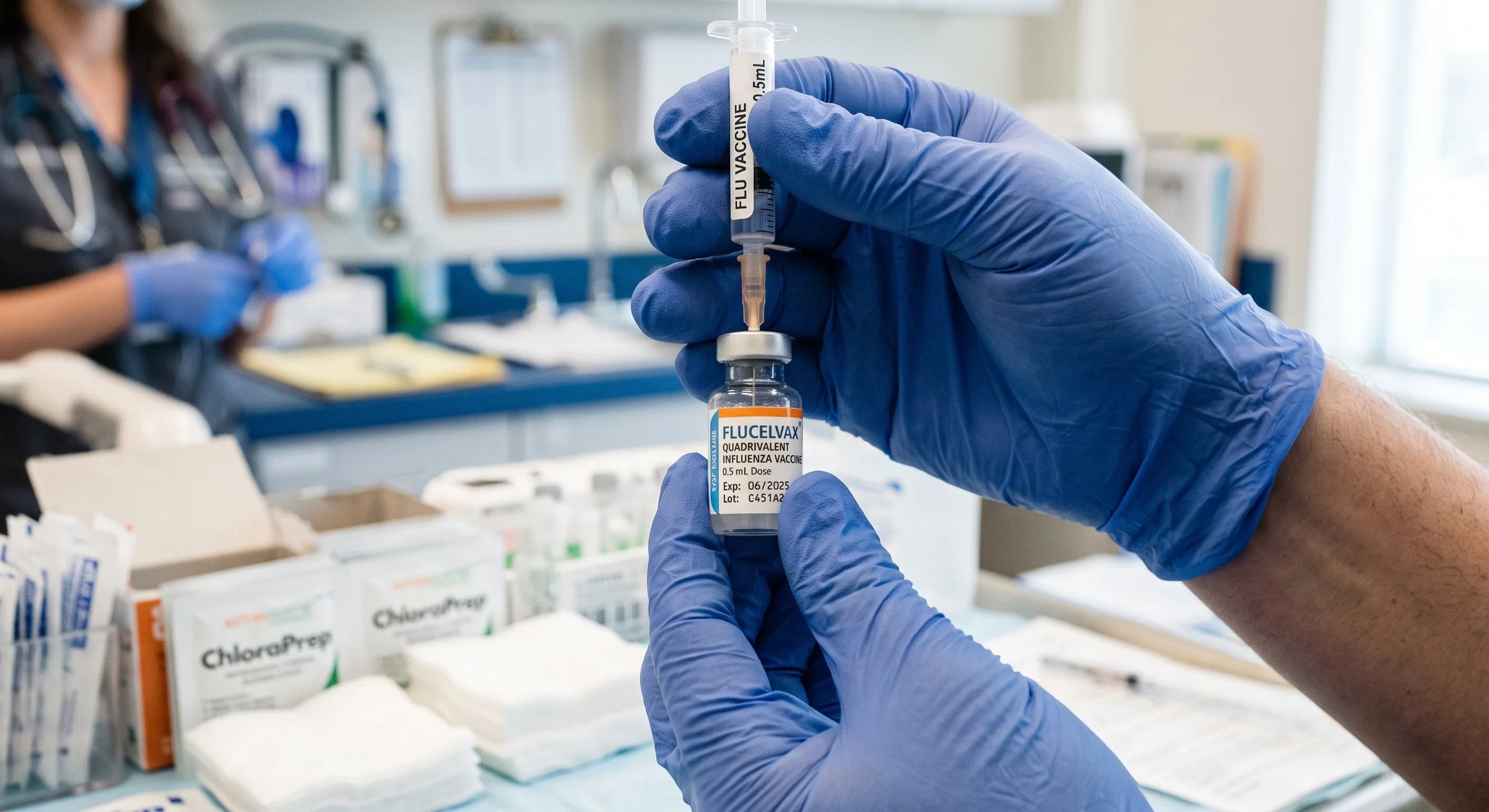
Every fall around Labor Day, the pharmacy chains put out their sidewalk signs and start pushing flu shots as aggressively as they push pumpkin spice. If you have walked past a Duane Reade or CVS in the past few weeks, you have probably seen the signage. Their calendar makes commercial sense. It does not necessarily make medical sense. As a concierge cardiologist practicing in Midtown Manhattan, I want to explain why I am asking most of my patients to wait a few more weeks before rolling up a sleeve, what the research actually shows about flu shot timing, and how you can get vaccinated in our office without an appointment when the time is right.
At Madison Avenue Concierge Medicine, Dr. Meyer keeps himself and his patients on the cutting edge of every new medical development and study.
That’s the Madison Avenue Concierge Medicine advantage.
Be in the know regarding your health.
No excuses.
Join Madison Avenue Concierge Medicine
Why Does Flu-Shot Timing Matter More Than People Realize?
The flu vaccine is not a permanent upgrade to your immune system. It teaches your body to make specific antibodies against the strains circulating this year, and those antibodies fade over time. Research consistently shows that vaccine protection begins to wane roughly six weeks after vaccination.
A large Kaiser Permanente study published in Clinical Infectious Diseases quantified this precisely. Compared with patients vaccinated 14 to 41 days before being tested for flu, those vaccinated 42 to 69 days earlier were 32 percent more likely to test positive. The odds of a positive test increased by roughly 16 percent for every additional 28 days since vaccination. By six months out, the risk of testing positive had roughly doubled.
Translated into plain terms: if you get your shot in early September, a meaningful chunk of your protection may already be gone by the time flu peaks in January or February. If you get it in late October or early November, you are much more likely to have peak antibody levels during the weeks of highest risk.
The CDC's official language recommends vaccination by the end of October, but that same guidance also notes that early vaccination, meaning July or August, can leave people underprotected by the height of flu season. For older adults in particular, the CDC specifically warns against getting vaccinated too early because immunity wanes faster in this group.
Get The Meyer Nutrition Plan
Why Has Flu Season Been Shifting?
There is another reason to hold off, and it has to do with the weather. Flu virus transmits most efficiently in cold, dry air. Cooler indoor conditions, tighter clustering of people indoors, and lower humidity in heated apartments all contribute to the classic winter surge.
As late summers and early autumns have grown warmer and more humid across the Northeast, the classic pattern has shifted. Studies published in journals ranging from PLOS Currents to Environmental Research Letters have documented that milder autumns and warmer early winters push the onset and peak of flu season later. Last flu season, the 2024 to 2025 wave, illustrated the point nicely. National flu activity did not really begin ramping up until mid-November, peaked in February, and ended up being the most severe season since 2017 to 2018 in terms of hospitalizations and deaths.
If flu is not really circulating in earnest until mid-November or later, then a September flu shot is racing a clock it does not need to be racing. October and early November is the sweet spot for most patients.
What Do I Recommend To My Patients?
For most of my adult patients in New York City, I recommend getting the flu shot between October 15 and November 15. That window gives your immune system the roughly two weeks it needs to build full antibody response before flu activity typically ramps up, and it keeps your protection strong through the January and February peak.
There are, of course, individual exceptions. You should consider getting vaccinated earlier if:
You have significant lung disease, advanced heart failure, or are on chemotherapy or another immunosuppressive treatment, since any protection is better than none for you.
You are pregnant, in which case current guidance is to get vaccinated at any point in pregnancy when a shot becomes available, since maternal antibodies also protect the newborn.
You are traveling to the Southern Hemisphere during their winter, roughly April through September.
You have a young child who needs two doses spaced four weeks apart. Start those earlier.
You should consider getting vaccinated later, closer to the mid-November end of the window, if:
You are 65 or older. Waning immunity is a bigger issue in this age group, and the high-dose or adjuvanted vaccines designed for older adults benefit from precise timing.
You have a family history of not getting flu until late in the season and want maximum coverage during peak.
To summarize, all patients should receive a flu, to ameliorate the flu, to reduce lifetime risk of heart attack and stroke, and in patients with cardiovascular risk factors, prevent acute heart attacks and stroke.
Studies are emerging that show that the influenza vaccine can provide important cardiovascular protection, significantly reducing the risk of a flu-related heart attack or stroke, even in people who become infected despite being vaccinated.
We have long known that the systemic inflammation triggered by influenza can temporarily increase the risk of serious cardiovascular events. Vaccination helps reduce that risk primarily by preventing infection. However, a new study published in the April issue of Eurosurveillance suggests that the vaccine may also lessen the cardiovascular consequences of influenza when a breakthrough infection does occur.
And further, there’s a new study out by Laurent Fauchier, MD, et al., asserting that the influenza vaccination was associated with lower risks of incident atrial fibrillation (AFib) and multiple cardiovascular outcomes. I’ll be covering that more thoroughly in an upcoming post.
Madison Avenue Concierge Medicine relies on a wide range of diagnostic technologies to assess cardiovascular health.
These tools allow Dr. Meyer to make accurate diagnoses and inform evidence-based treatment plans.
Why Not Skip the Pharmacy Line and Walk Into Our Office?
We give flu shots in the office to our patients without an appointment. You are welcome to walk in during regular hours when you are ready, though a quick call ahead is appreciated so we can have things ready for you and minimize any wait. This is one of the practical advantages of a concierge practice. You do not need to hunt through insurance formularies, wait behind a pharmacy line, or fill out redundant paperwork every year.
For patients over 65, we stock senior flu-shot formulations designed to trigger a stronger immune response in the older immune system. For patients with egg allergy, complex medication regimens, or a history of unusual vaccine reactions, we can talk through options and pick the right product for you.
If you are unsure about timing given your specific medical situation, please reach out. That is what we are here for. Fifteen minutes on the phone with someone who knows your history is worth more than reading a dozen articles online.
The pharmacies want to capture your flu shot business as early as possible, and they are not wrong that a shot in September will still provide some protection. But if you want maximum immunity during the weeks when flu is actually circulating in New York City, October 15 to November 15 is the window most of my patients should aim for. Older adults, pregnant patients, and immunocompromised patients may have different ideal timing, and we are always happy to walk through that with you.
Come see us when the time is right. And while an appointment or same day call are helpful, any patient can stop in unannounced for a shot. We’ll get you vaccinated, and have you back on your way in less time than it takes to find parking in Midtown.
Sources
ACIP Recommendations Summary for Influenza Vaccination (CDC)
Study: Flu Vaccine Protection Starts to Wane Within Weeks (CIDRAP, University of Minnesota)
Fauchier L, Guglieri M, Lenormand T, et al. Influenza vaccination, incident atrial fibrillation, and cardiovascular outcomes. EHJ. Published online July 11, 2026. Doi: https://doi.org/10.1093/eurheartj/ehag543
Climate Change Could Reshape Flu Seasons Across the Americas (Brown University School of Public Health)
When Should I Get My Flu Shot? A Guide for Older Adults (National Council on Aging)
When to Get Your Flu Shot (Mass General Brigham)Does Influenza Vaccination Reduce AFib Risk?