What a New Harvard Study Tells Us About Women, Weight Lifting, and Heart Disease
© 2026 Vannoni
For decades, when we talked about exercise and heart health, the conversation was almost entirely about aerobic activity. Walk more. Get your steps in. Do cardio. That advice is still solid. But there is a growing pile of evidence that the missing piece for millions of women is something most of them never do: pick up a set of weights.
The most compelling data yet on this question just landed in the Journal of the American College of Cardiology, and I want every woman reading this to know what it says. It could change how you approach your next 20 years of health.
What Did the New Study Actually Find?
Researchers at the Harvard T.H. Chan School of Public Health followed 117,025 women from the Nurses' Health Study and Nurses' Health Study II, two of the largest and longest-running studies of women's health in the world. They tracked how much resistance training the women did over decades, along with their aerobic activity and time spent watching television. Then they counted heart attacks, strokes, bypass surgeries, and stent procedures.
The results are striking. Women who did two or more hours of strength training per week had a 20 percent lower risk of major cardiovascular disease compared with women who did none. When the researchers zeroed in on heart attacks specifically, the risk was 44 percent lower. Every additional hour of strength training per week was linked to a further 14 percent reduction in heart attack risk.
Perhaps the most important finding is what happened when women combined strength training with aerobic exercise. In that group, adding two hours of resistance work per week to the standard 150 minutes of cardio was tied to a 45 percent lower heart attack risk compared with women who did no physical activity at all. Meeting all three targets, strength training, aerobic activity, and limited television time, produced the lowest cardiovascular risk in the entire study.
This is not a small trial or a preliminary finding. It is one of the largest, most rigorous looks at strength training and women's heart health ever done, and it lines up neatly with what many of us in cardiology have been arguing for years.
Bespoke Concierge Medical Care
Madison Avenue Concierge Medicine
Why Do Women, in Particular, Need This?
Heart disease is still the number one killer of women in the United States, and yet many women I see in clinic assume it is more of a men's issue. That misconception has real consequences.
Women face a specific biological window that makes strength training especially important. During and after menopause, dropping estrogen levels accelerate the loss of both bone and muscle. Women are already at higher risk of sarcopenia, the age-related loss of muscle mass, than men. Studies suggest women have roughly 50 percent higher odds of being diagnosed with sarcopenia even after accounting for age and other factors.
Less muscle is not just a strength issue. Muscle is your body's largest reservoir for absorbing blood sugar, one of the most important sites for regulating cholesterol metabolism, and a major factor in your resting metabolic rate. When women lose muscle in their 50s and 60s, insulin resistance often creeps in, visceral fat accumulates around the organs, blood pressure rises, and cardiovascular risk climbs. Strength training directly interrupts this cascade.
What Is the The Biology of How Muscle Protects Your Heart?
There is no magic in a dumbbell. What happens when you consistently challenge your muscles against resistance is that your body responds by improving several systems that matter for cardiovascular health.
Insulin sensitivity improves, which lowers your risk of developing type 2 diabetes, a major driver of heart disease. Blood pressure typically drops modestly with regular resistance work, similar to what we see with aerobic exercise. Cholesterol and triglyceride profiles tend to improve. Body composition shifts, with more lean muscle and less visceral fat. Chronic inflammation, which quietly accelerates plaque buildup in your arteries, appears to decrease.
Perhaps most importantly, strength training preserves the functional capacity that keeps you living independently as you age. The women in the strongest fifth of grip strength in their 60s have dramatically lower rates of falls, fractures, hospitalizations, and cardiovascular events over the following decade.
Power Up & Join Madison Avenue Concierge Medicine
Access highly personalized premium medical and wellness care by coming to Madison Avenue Cardiovascular & Concierge Medicine in Midtown, Manhattan. Dr. Mark Meyer offers the most elite, private and bespoke concierge medicine program in New York. Exquisitely personal, our medical values are solidly established within a traditional physician-patient relationship. Hence, every patient becomes part of our family.
Book Your Appointment Today
What Counts as Strength Training?
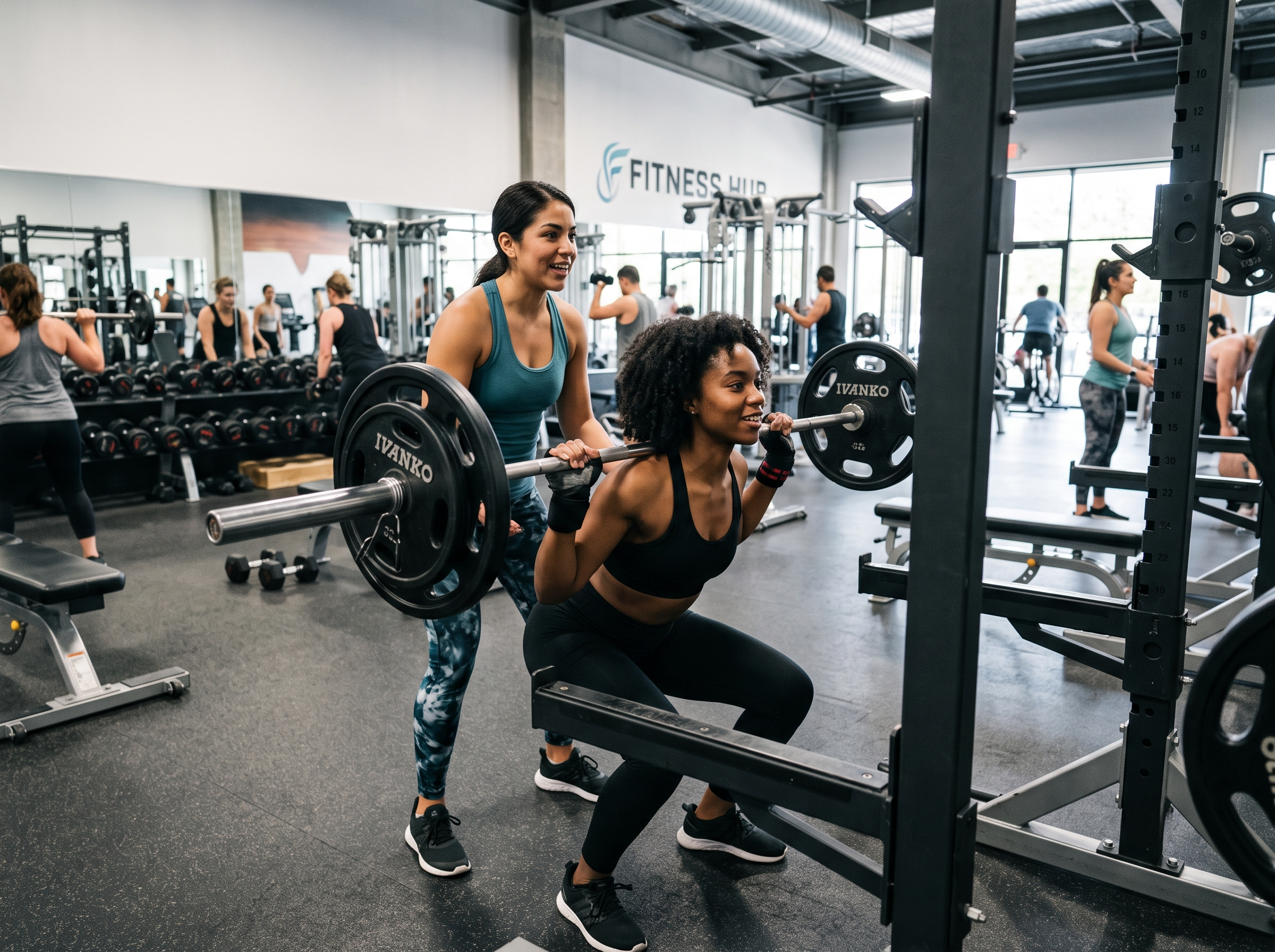
You do not need to become a competitive powerlifter or spend hours at a gym. The women in the Nurses' Health Study who saw the biggest cardiovascular benefit were doing about two hours per week total, which works out to roughly two to three 30 to 45 minute sessions.
Strength training simply means working your muscles against resistance. That resistance can come from free weights, machines, resistance bands, or your own body weight. Push-ups, squats, lunges, planks, rows, and deadlifts all count. The federal physical activity guidelines already recommend that adults do muscle-strengthening activities at least twice a week involving all the major muscle groups.
A reasonable starter routine for someone new to lifting is two sessions per week that include one pushing movement, one pulling movement, one squat variation, one hip hinge, and a core exercise. Even 20 to 30 minutes per session is enough to start seeing benefits.
Premium Medicine
We pride ourselves to consider all preventative care and longevity at the root of all clinical plans of action. Our office has state of the art equipment and technology for providing the best medical care with precision, covering all types of conditions including the most complex ones in cardiology and internal medicine.
Give Us A Call If You Have Questions
What Are Some Practical Options in New York City?
New York makes this easier than it looks, even if you have never set foot in a gym.
Try a strength-focused class at a boutique studio. Barry's, Fhitting Room, Rumble, Solidcore, and Equinox Pilates all incorporate resistance work with instruction, which is helpful when you are learning the movements.
Look for a personal trainer for four to six sessions to learn the basics of proper form. This is one of the best investments a beginner can make, and many trainers around the city offer introductory packages.
Use a free bodyweight app like the Nike Training Club at home. A small set of adjustable dumbbells or resistance bands fits under a bed and turns your apartment into a gym.
Take advantage of your building or neighborhood gym. Most buildings in Manhattan and Brooklyn have at least a small fitness room with the basics. That is genuinely all you need.
Add strength work into your existing routine. Two to three sets of squats and push-ups while your coffee brews, or a resistance band workout during a Zoom-free lunch break, adds up over the week.
What Is The Part Nobody Wants to Talk About?
Buried in the same JACC study is a finding that deserves its own paragraph. Television watching time was tracked separately as a marker of sedentary behavior, and it was independently linked to higher cardiovascular risk regardless of how much exercise the women were doing. The women who did the best had strength training, aerobic activity, and lower sitting time all working together.
You cannot fully outrun a chair. If your workday involves eight to ten hours at a desk, break it up. Stand for calls, take walking meetings, get up every hour, and be honest about how much of your evening you spend on the couch.
If you are a woman, especially one heading into your 40s, 50s, or beyond, adding two or three sessions of resistance training per week is one of the highest-yield things you can do for your heart, your metabolism, your bones, and your long-term independence. Cardio still matters. Sitting less still matters. But the piece that has been missing from most women's routines is the strength piece, and this new study makes it clear that the benefits are real and substantial. Talk with your cardiologist or primary care doctor before starting if you have known heart disease, uncontrolled blood pressure, or joint issues. For most women, though, the best time to start lifting was 10 years ago. The second best time is this week.
Sources
Journal Scan: Strength Training and Cardiovascular Events in U.S. Women (ACC Latest in Cardiology)
Physical Activity Guidelines for Americans (U.S. Department of Health and Human Services)
American Heart Association: Strength and Resistance Training Exercise
Non-Pharmacological Interventions on the Prevention of Sarcopenia in Menopausal Women (PMC, 2023)
American Heart Association: Heart Disease and Stroke Statistics in Women